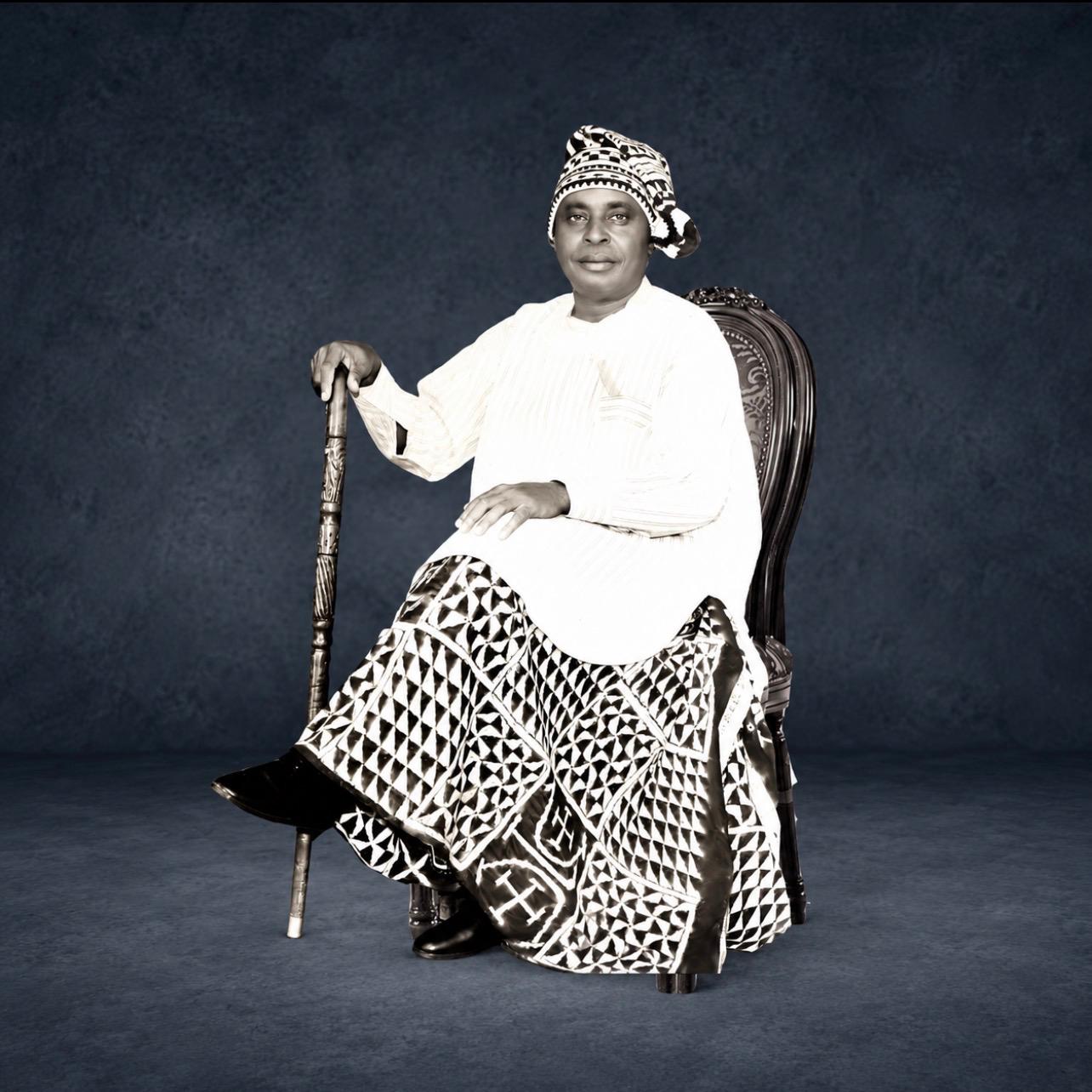
Photo: Elder Chief Ogwuma Kalu Isiolu
By Dr. Nnaoke Ufere
Few lives in Ututu’s history have touched so many others as deeply as that of Elder Chief Ogwuma Kalu Isiolu of Obiene Ututu. With modest means and an uncommon sense of duty, he helped shape the minds, character, ambitions, and futures of generations of young Ututu women and men.
During forty-one years in education, including his service as the first indigenous Headmaster of Ututu Central, he taught generations of our community’s sons and daughters.
The true measure of a teacher is found in the lives he helped shape and the opportunities he created. By that measure, Elder Isiolu earned his place in the pantheon of Ututu’s greatest educators and public servants.
He knew every student by name and took an active part in running the school. A capable administrator, he earned our community’s respect and trust. When he spoke, people listened. He welcomed people, made time for them, and helped settle disputes.
His understanding of a teacher’s role recalls Aristotle’s affirmation that those who educate children deserve greater honor than those who merely give them birth, for parents give them life, while educators give them the means to live well (Diogenes Laertius, Lives of the Eminent Philosophers, Book V, §19).
More than two thousand years later, that philosophy found practical expression in Elder Isiolu, affectionately known as Teacher Ogwuma.
Ututu produced many teachers during his time, but few combined intellectual discernment, moral authority, integrity, compassion, and such a sustained commitment to their pupils. He recognized talent and protected dignity.
His pupils became engineers, physicists, educators, doctors, nurses, pharmacists, social scientists, lawyers, bankers, businesspeople, builders, architects, and other professionals whose contributions reached far beyond his classrooms.
These men and women created opportunities for others. He gave us a gift that keeps giving.
Four accounts of his care for students reveal what that meant better than any catalogue of his virtues.
*Recognizing A Brilliant Mind*
Admission to Hope Waddell Training Institute in Calabar was highly competitive. The opportunity to sit its entrance examination was ordinarily reserved for the best-performing pupil in Standard Six, the final primary class. But Isiolu recognized exceptional ability in a boy still in Standard Five.
He did not wait.
Isiolu paid for the boy to travel to Arochukwu and sit the examination. It was more than encouragement. He staked his own money and his own judgment on the child’s ability. The pupil reportedly placed first among all applicants in the region and entered Hope Waddell on a full scholarship.
The boy later set academic records at every institution of higher learning he attended, some still unbroken. He became one of Ututu’s most brilliant minds and an accomplished professor of engineering, fulfilling the promise Elder Isiolu had recognized in him as a Standard Five pupil.
Talent in a child has no degree, title or public reputation. Someone has to recognize it before any of those things exist. A serious teacher does more than recognize promise. He creates the circumstances in which that promise can be tested.
Isiolu understood the difference between a child’s place in the school system and his readiness for advanced work. Education meant giving each child opportunities suited to his ability.
*Making it Easy For Parents to Pay School Fees*
Yet his concern was not limited to the brilliant pupil.
Former students remember the humiliation that accompanied unpaid school fees at Ututu Central. I remember it because I was one of those children.
A pupil would be called to the front of the class and told to bring the fees the following morning. For a child from a poor farming household, the ritual was deeply unfair. You had no income of your own, no crops to sell and no control over when your parents would have the money. Yet you were the one made to stand before the class and carry the embarrassment of a debt you could not possibly pay.
I had assumed this memory was largely personal. It was not. Of the ten former pupils I interviewed for this article, seven independently recalled the same experience: the anxiety of hearing names called, the walk to the front of the class, the public warning and the shame of having a family’s financial difficulty exposed before other children. Decades later, the memory remained clear.
Children may forget much of what happens in a classroom, but they remember being humiliated.
Elder Isiolu was unaware of the practice. Once informed, he stopped it. He understood that many parents were farmers whose ability to pay depended on planting, harvesting and selling produce. Money was not available simply because the school calendar demanded it.
He met with parents and introduced an arrangement allowing school fees to be paid in instalments over the school year.
He did not confuse poverty with irresponsibility or believe that a child’s dignity had to be sacrificed to collect school fees.
For those of us who had made that walk to the front, the change meant being able to learn without wondering whether the next name called would be yours. Some children from those farming families later became prominent in Ututu. By making room for their circumstances, he helped them remain in school.
*Housing Long-distance Students*
His concern extended into his home. His house in Ututu Central was always full of students who could not afford accommodation. He gave young people from distant communities, including Isu, Amaetiti, Ubila, and Obiene, a place to live so they could attend school.
One former student recalled that Teacher Ogwuma treated them as members of his own family. Without that home, he said, he could have dropped out of school and never earned his university degree. Looking back on what he has become, he remains indebted to the kindness and foresight of the teacher who made room for him.
*Sponsoring Three Nursing Students*
That support also reached young women seeking professional training. Three aspiring nurses, two from Obiene and one from Ukwuakwu, could not afford the entrance examination fees. Teacher Isiolu paid. All three excelled and gained admission. When their families could not afford the school fees, he paid those too.
Afterward, when their parents came to repay him, he refused the money. He told them he had not helped their daughters in order to be repaid.
Whether paying examination and school fees, arranging instalments or providing accommodation, he responded to what each student needed. One child was ready to advance before the system normally permitted it. Others had the ability to succeed but lacked the means. He understood that a teacher’s responsibility included helping them overcome those obstacles.
To educate someone for life requires more than conveying information. It requires judgment about people, circumstances and possibilities.
His own education shaped that understanding. He trained at Boys Vocational School, Ididep, Hope Waddell Training Institute in Calabar, and Methodist College, Uzuakoli. He later studied privately through Worsley Hall, London, obtaining the London General Certificate of Education in five subjects, including English Language and Economics. Education had expanded his own possibilities, and he was prepared to extend the same opportunity to another child.
He began teaching in 1943 and served for forty-one years in schools across communities in what are now Abia, Ebonyi and Cross River States. In 1964, the Presbyterian Church appointed him the first indigenous Headmaster of Ututu Central School. He retired in 1984 as a Headmaster Special Class.
Isiolu believed that education had to produce more than literacy. He placed value on discipline, honesty, responsibility, hard work and consideration for others because the children before him would eventually become adults responsible for families, institutions and communities.
*Institution Builder*
In 1962, Presbyterian teachers in Ututu and Ihechiowa selected Ogwuma Kalu Isiolu and N. E. Otta to approach the Ministry of Education of the Eastern Region in pursuit of a secondary school for the area. Their efforts contributed to the establishment of Ututu/Ihe High School in 1964, and Isiolu later served as chairman of the committee responsible for running the institution. In 1967, one of its houses was named Isiolu House in recognition of his contribution.
The teacher who financed one pupil’s examination also worked to expand access for many. The scale changed. The principle did not.
He understood that ability without opportunity could be wasted.
That conviction followed him into community and public service. He became a founding member of the Obiene Development Union and later served as Chairman of the Board of Governors of Ututu Secondary Commercial School and as a member of the Ututu Leaders of Thought.
He treated women and men with equal respect and defended women’s rights.
In 1990, he was appointed to the five-member Caretaker Committee of Arochukwu Local Government Area, with responsibility as Supervisory Councillor for Finance and Economic Development. In public office, he retained the teacher’s habits: attention to people, concern for institutions, a belief in preparation, and an insistence that responsibility should produce useful results.
A long-standing member of the Presbyterian Church of Nigeria, he became a Ruling Elder in 1971 and served as Board Chairman at Obiene Ututu. In 2005, the East Synod of the Presbyterian Church recognized him with its Ambassador of the Gospel Award.
We readily remember successful professionals, public servants and businesspeople. Less attention goes to the teacher who helped establish the habits, confidence and education on which their achievements depended.
If you attended Ututu Central under Isiolu, you owe Teacher Ogwuma a debt of gratitude.
The pupils Teacher Ogwuma helped went on to educate their children, support siblings and pay school fees for relatives. Many of those who benefited never knew him, but their families could trace those opportunities back to the help he had given.
That commitment to education and family was equally important in his own home, where he shared the work of raising children with his wife of forty-six years, the late *Elder (Mrs.) A. K. Isiolu*. She deserves her own place in this tribute. Beautiful, brilliant and compassionate, she gave those of us whose mothers came from Amodu one more reason to boast! Together, they raised seven children:
1. Chinyere Kalu Isiolu, son, now deceased.
2. Iheyinwa Nchege, daughter, B.Ed.
3. Chukwuemeka Kalu Isiolu, son, B.Sc., MBA, FCA, FCTI, HCIB.
4. Obioma Akakem, daughter, now deceased.
5. Ebere Onoh, daughter, B.Eng., FNSE.
6. Chijioke Ogwuma Isiolu, son, BL, LL.B.
7. Okechukwu Isiolu Kalu, son, B.Sc., MBA.
They taught their children to value education, work hard and remember their obligations to others. Their children’s accomplishments in learning and community service are a credit to both parents, and her contribution to the family deserves the same gratitude and recognition.
*The Enduring Legacy of Ututu’s Beloved Teacher and Benefactor*
Teacher Ogwuma Kalu Isiolu died in 2006 at the age of eighty-two.
He touched thousands of lives. The children he taught and helped grew up to raise families, educate their own children and support siblings, relatives and others. Many people who never met him have benefited from the opportunities he gave their parents and grandparents. He gave Ututu a gift that keeps giving.
For this generation and those to come, the lesson is simple: helping one child can change the lives of many others. The pupil whose fees we pay today may tomorrow help another family send a child to school. We see Teacher Ogwuma’s example being carried forward in the schools built by benefactors in Obiene, the renovations at Ututu Commercial Secondary School and the rebuilding of Ututu Girls Secondary School by its alumni.
These efforts deserve our gratitude and support. Teacher Ogwuma understood what such help could mean. We owe him more than gratitude; we owe the children coming after us the same care he gave those before us.
Yet as I researched this article, one vexing question kept returning: Do we still give a lifetime of service the respect it deserves? What do we teach our children to admire? Do we ask how a person acquired wealth, how he treats others, or whether his service reflects the sustained personal commitment that defined Isiolu’s life? Or have wealth, titles and self-importance become sufficient grounds for respect?
Teacher Ogwuma earned respect because people knew what he had done for them. Parents trusted him with their children. Former pupils could explain how his decisions had changed their lives. If wealth and titles now command greater respect than such service, we must ask what has changed in our understanding of a successful life.
Is that change part of modernism? Or does it reflect cultural nihilism, a rejection of the obligations we once felt towards one another? Modern life does not require indifference to our neighbours. Education, technology and greater wealth should increase our capacity to serve. They give us no reason to value honesty, generosity and public responsibility less.
The choices we make about whom to honor have consequences. When wealth attracts admiration without scrutiny, we teach children that its source does not matter. When titles command more respect than useful work, we encourage the pursuit of status. When decades of teaching receive less attention than a public display of money, we make our priorities clear. We help produce the conduct we later condemn.
Those priorities also affect the work people are willing to undertake. Helping a struggling pupil, supporting a family, resolving a dispute fairly and protecting an institution from neglect bring little publicity. Yet Ututu depends on people willing to do these things consistently. When their work goes unrecognized while personal advancement receives all the applause, the whole community loses.
Remembering Elder Isiolu therefore requires us to examine ourselves. Would we recognize a person like him today? Would we support his work? Would we give him the same attention we give those whose chief claim to importance is money?
Our answers must be visible in how we treat people who serve Ututu now. We should support their work, recognize their contribution and teach our children why it matters. Our children learn what to admire by watching whom we respect.
That is why Teacher Isiolu should be overlooked no more.
Remembering him properly requires more than praise. Surviving pupils’ memories should be recorded firsthand, and his contribution should become part of Ututu’s documented history. A scholarship, educational fund or award for outstanding teachers in his name would connect remembrance with his life’s work.
There could be no more appropriate memorial.
The most faithful way to honor him is to ensure that another talented child is discovered, another poor child remains in school, and another generation receives the opportunity he spent forty-one years helping to provide. In doing so, Ututu will raise more men and women who remember the help they received and give others the same chance. This is how societies advance: each generation takes responsibility for the next.